Struggling with blister-forming defects? Master the forming temperature of blister machine: optimal settings, adjustment steps, troubleshooting, and pro tips to boost your production yield.
For pharmaceutical and packaging manufacturers, the forming temperature of the blister machine is the most critical process parameter, directly determining packaging quality, product yield, and production cost. A wrong temperature setting will lead to incomplete forming, blister holes, material sticking, or even non-compliant medical packaging, resulting in massive material waste and unplanned downtime. In this guide, we break down everything you need to know about this core parameter, providing actionable tips based on our 10+ years of experience in blister packaging machine manufacturing.
The forming temperature of the blister machine refers to the precise heating temperature applied to blister packaging films (such as PVC, PVDC, PET) to soften the material to a thermoelastic state, so it can be molded into uniform, intact blister cavities under forming pressure.
This temperature is not just a number on the controller—it is the foundation of your entire blister packaging process:
There is no one-size-fits-all value for the forming temperature of the blister machine. The optimal setting depends entirely on your packaging material, which is the first thing you must confirm before starting production. Below are the industry-recognized standard temperature ranges for mainstream pharmaceutical blister materials:
| Material Type | Standard Forming Temperature Range | Key Notes |
| PVC (Most Widely Used) | 110℃ – 130℃ | Low softening point; too high temperature causes sticking/holes, too low leads to incomplete forming |
| PVC/PVDC Composite Film | 120℃ – 140℃ | A higher barrier layer requires a slightly higher temperature for uniform softening |
| PET Film | 140℃ – 160℃ | High temperature resistance, needs sufficient heat to avoid uneven stretching |
| PP Film (High-Temp Sterilization) | 150℃ – 170℃ | A narrow optimal temperature range requires high-precision temperature control |
Even if you set the standard temperature range, you may still face forming defects. These 3 core factors directly change the actual effect of the forming temperature of the blister machine, and are often overlooked by production teams:
The uniformity and accuracy of the machine’s heating system are the prerequisites for stable temperature control. A high-quality blister machine uses a PID precision temperature control system (±1℃ error) and a multi-zone uniform heating plate to avoid local overheating or insufficient heating of the film. Low-end machines with poor heating design will have inconsistent forming even with the same temperature setting.
Forming temperature does not work alone—it must be matched with production speed and forming pressure. When you increase the line speed, the film stays in the heating zone for a shorter time, so you need to raise the temperature appropriately to compensate. If the temperature is too low, even high-forming pressure cannot create a complete blister; if the temperature is too high, excessive pressure will cause blister holes.
Thicker films require higher temperature and longer heating time to reach the ideal softening state. Meanwhile, a low-temperature workshop or strong air flow near the machine will cause the film to dissipate heat quickly during heating, so you need to appropriately increase the set temperature to ensure the actual film temperature meets the forming requirements.
Incorrect temperature adjustment is the top cause of production waste. Follow this step-by-step guide to adjust the forming temperature of the blister machine safely and efficiently, with zero trial-and-error loss:
First, check the material specification sheet provided by your film supplier, confirm the material type and thickness, and set the base temperature according to the standard range we listed above.
Preheat the machine to the set base temperature, and keep it warm for 10-15 minutes to ensure the heating plate is evenly heated. Then run the machine at 30% of the rated speed, and observe the forming effect of 5-10 consecutive blister sheets.
Never adjust the temperature by more than 5℃ at a time. After each adjustment, run the machine for 3-5 minutes to stabilize the temperature, then check the blister-forming effect. Record the optimal parameter for each material and speed for future batch production.
After the blister passes the sealing test, dimensional inspection, and compliance verification in a 30-minute continuous small-batch run, lock the temperature parameters. Our DPP series blister machines are equipped with a parameter memory function, which can save 50+ sets of formulas for quick material changeover.
Most blister packaging defects come from incorrect setting of the forming temperature of the blister machine. Below are the most common issues and actionable fixes:
Mastering the forming temperature of the blister machine is the first step to high-quality packaging, and a high-performance blister machine with precise temperature control is the core to stable mass production.
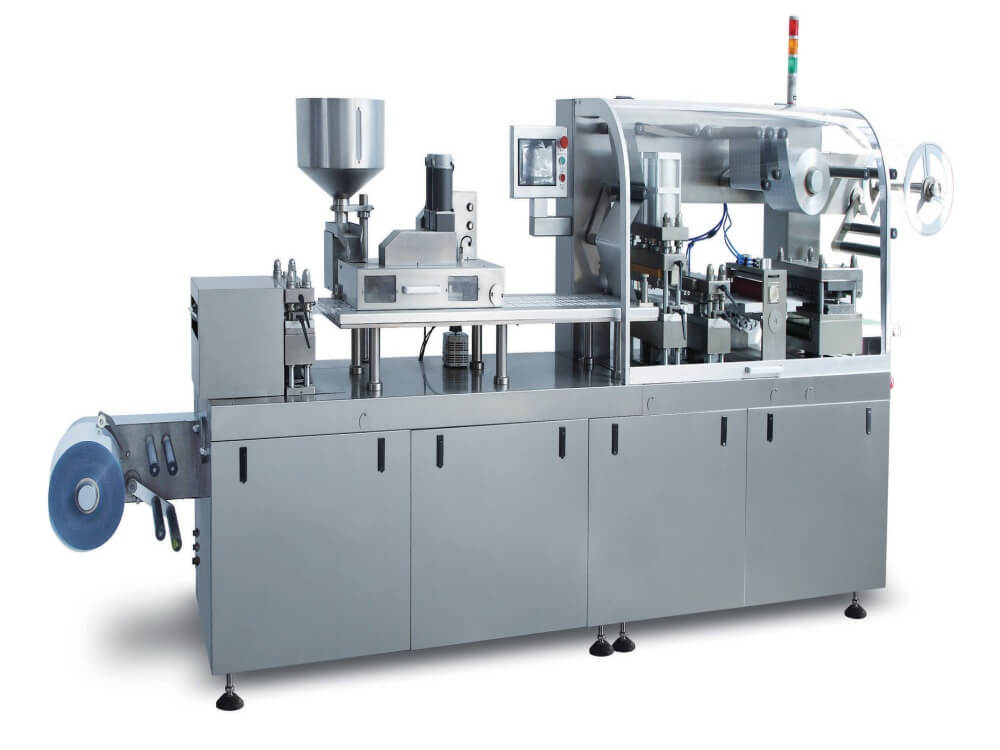
As a professional blister packaging machine manufacturer with 10+ years of industry experience, we provide full-series DPP blister packaging machines (from DPP-150 to DPP-260) equipped with an industry-leading PID precision temperature control system, uniform heating design, and GMP-compliant structure.
We also support full custom machine solutions: whether you have limited workshop space, special material packaging needs, or custom production speed requirements, we can tailor the perfect solution for you, just like we did for our clients who needed a modified DPP-260 for a 3m workshop.
If you have any questions about the forming temperature of the blister machine or need a free consultation and custom solution for your blister packaging line, contact our technical team today. We will get back to you within 12 hours with a professional solution tailored to your production needs.
The forming temperature of the blister machine is the core parameter, which works together with heating time and forming pressure to ensure perfect blister forming. Among the three, temperature has the most significant impact on the final packaging quality.
No. Different blister materials have different softening points and heat resistance. Using the wrong temperature will lead to serious forming defects and even damage the material’s barrier performance, resulting in non-compliant pharmaceutical packaging.
This is usually caused by uneven heating of the heating plate, poor temperature control accuracy, or unstable workshop ambient temperature. Our blister machines use a multi-zone uniform heating design and a high-precision temperature control system to completely solve this problem.
We are the best manufacturer of Blister Packing and Forming Machine. We can provide professional solutions for you. Please feel free to contact us for a quick quote now!
You can get a price of this model or send us any question to get any information you would like to know, we will reply to you soonest.