Automatic Liquid Blister Packing Machine for Pharma, Food & Cosmetics
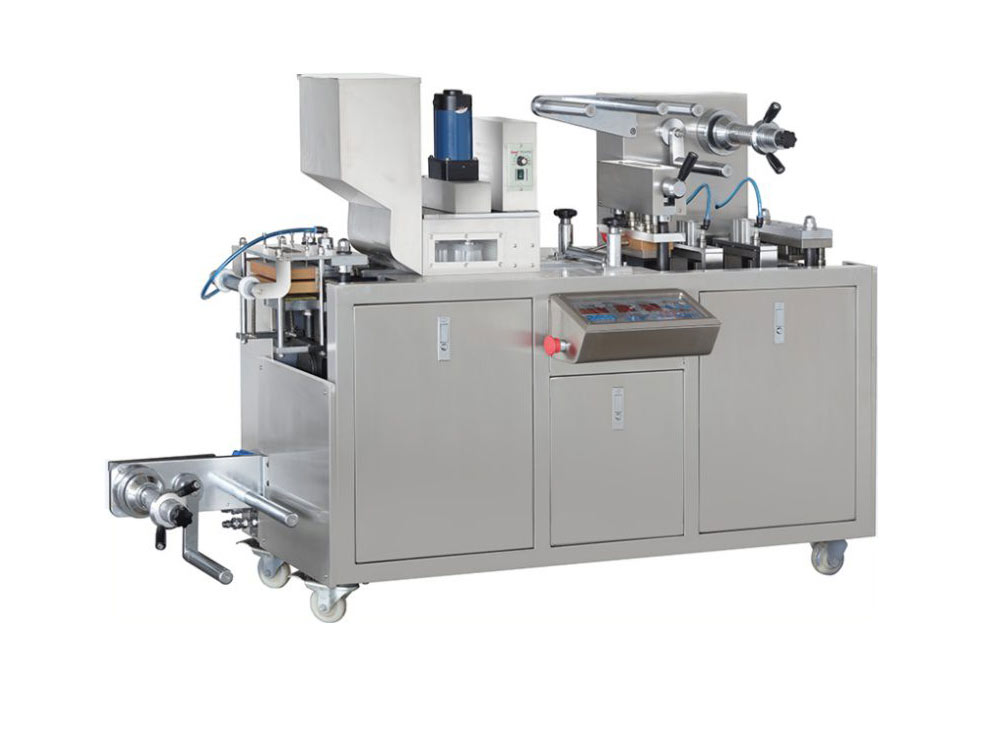
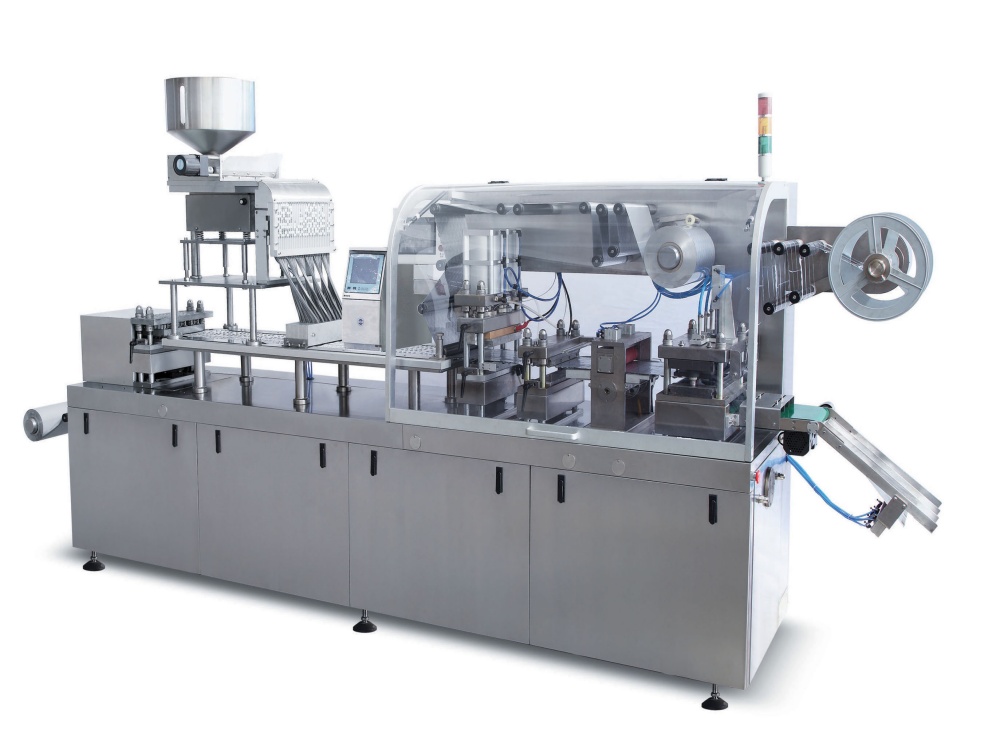
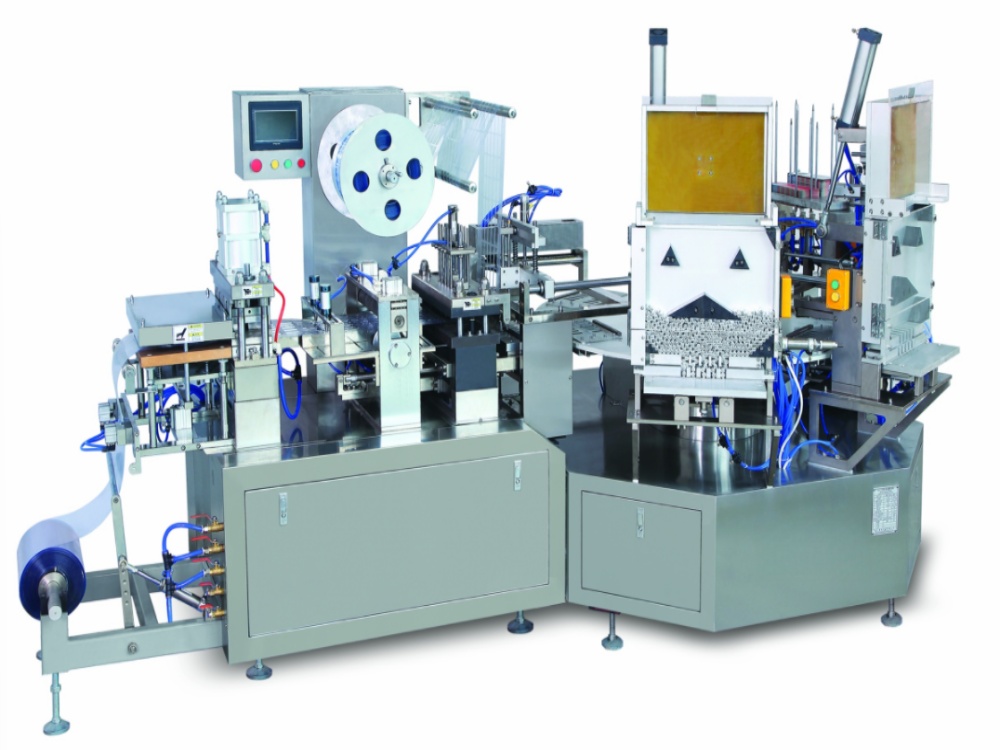
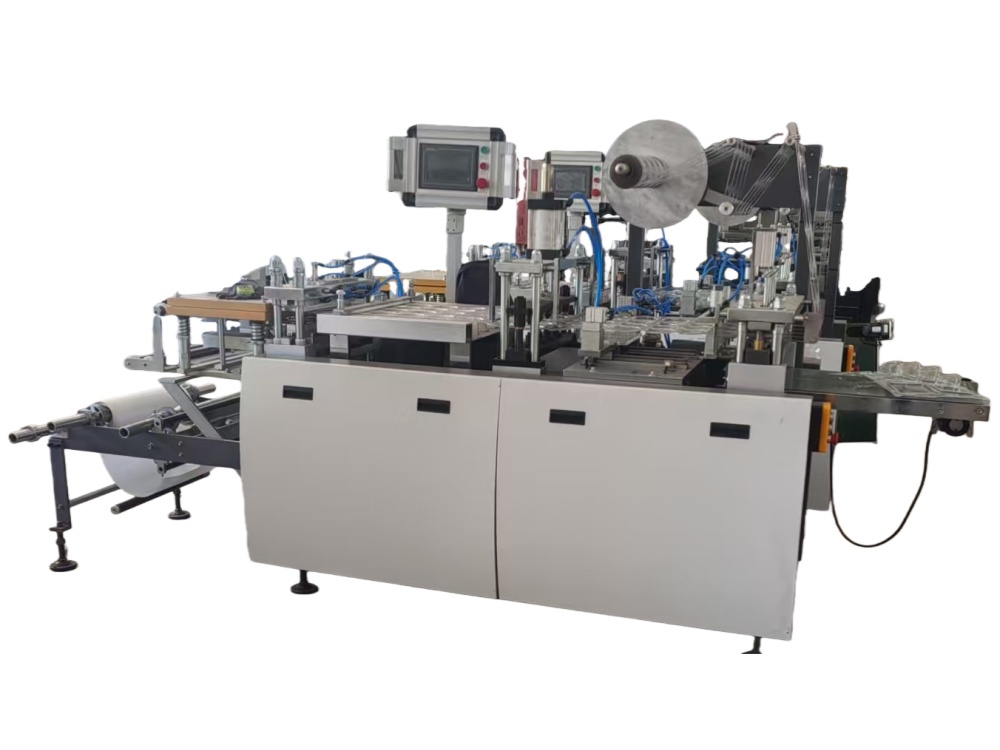
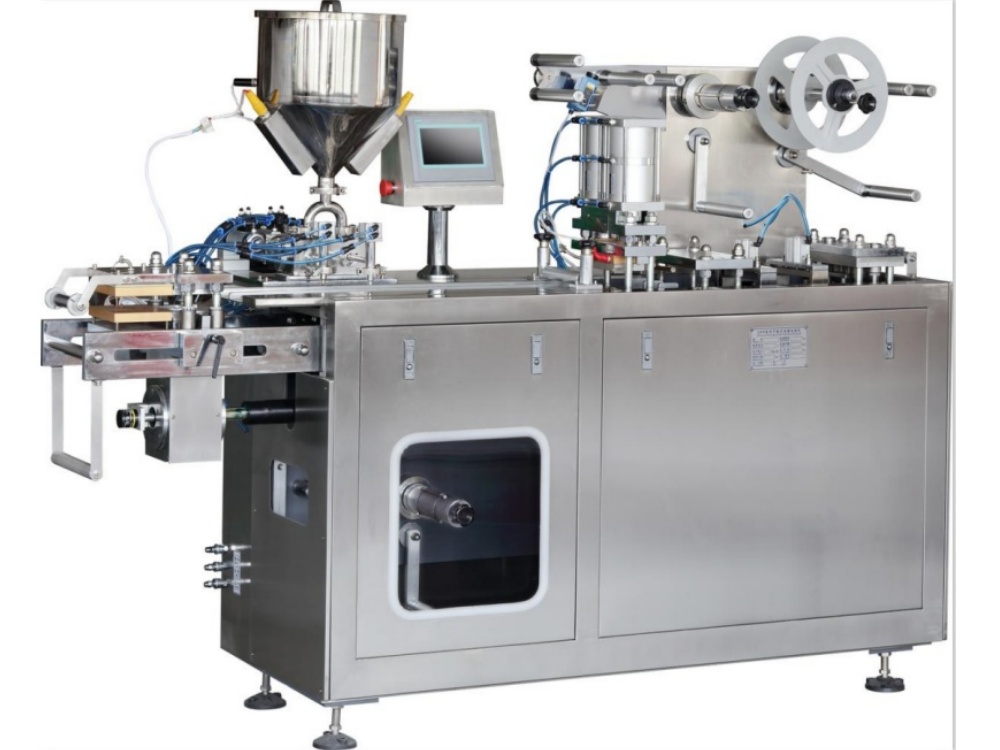
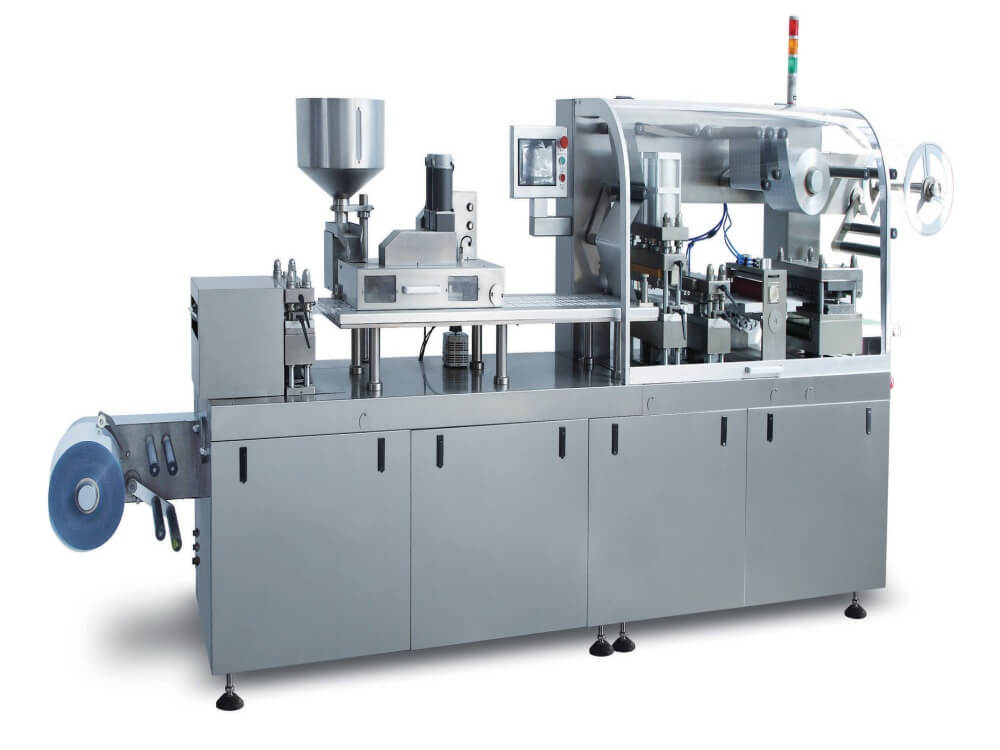
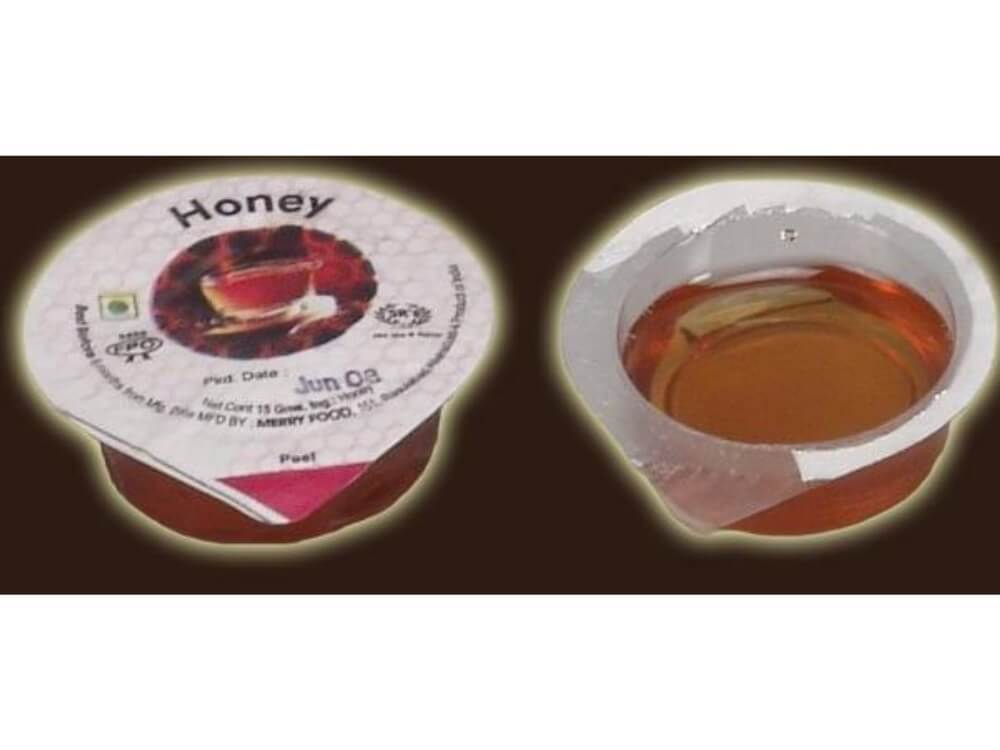
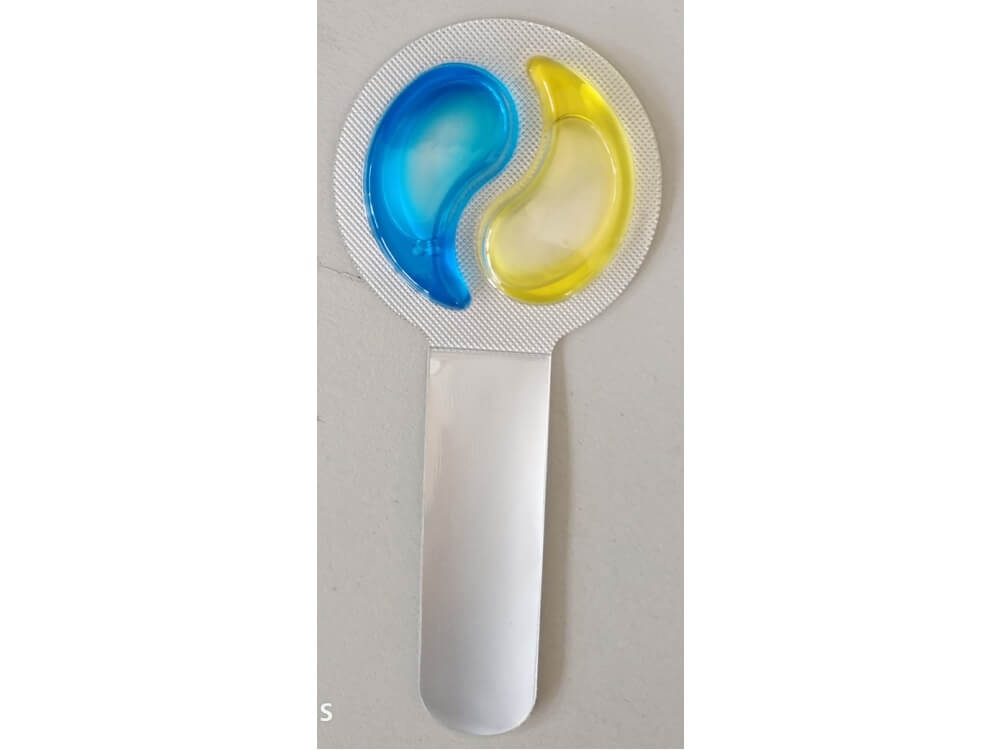
The machine is a new innovative design by our company, which is widely used for packaging of liquid/paste products such as jam, honey, butter, chocolate, eye mask, hair mask, face mask in blister packing with Alu/PVC in the field of health products, foodstuff, cosmetics, etc.
Suitable for the food industry (jam, butter, honey, tomato sauce, chocolate sauce, oil), small cup packaging, and the cosmetics industry (hair mask, face oil, essential oil, mouthwash), with small sample packaging.
Liquid Blister Packaging in Pharmaceutical Industry
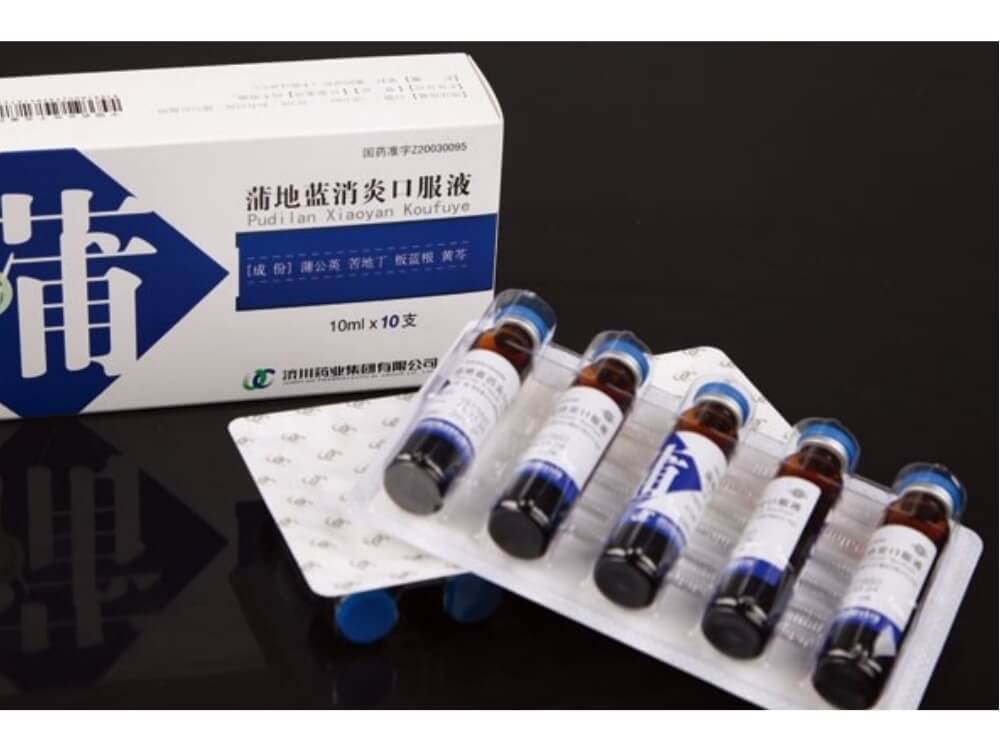
It is used for packaging cough syrup and other liquid medicines. It is also suitable for aseptic packaging of oral liquid, external disinfectant liquid, and other products, and meets GMP standards.
Used for packaging jams, butter, etc. The food industry focuses on small-dose packaging of paste-like and liquid ingredients such as jams, butter, and salad dressings.
It is used for packaging emulsions, perfumes. In the cosmetics industry, it is targeted at portable packaging for essence, small-sized perfumes, emulsions and other products.
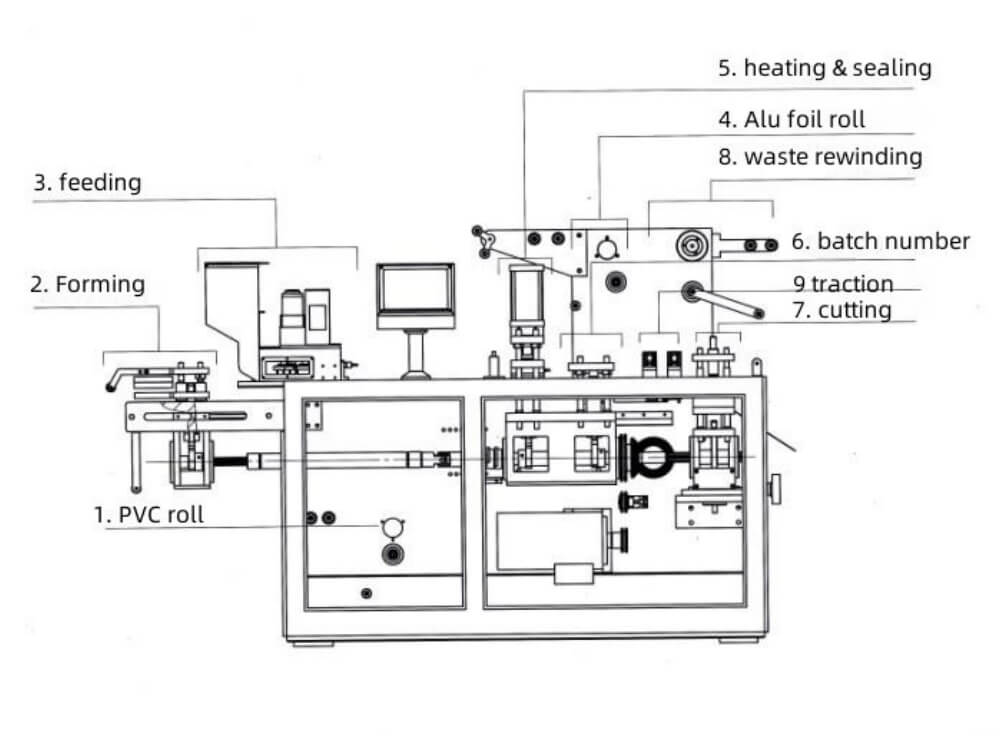
Liquid Blister Pack Machine Working Process Diagram
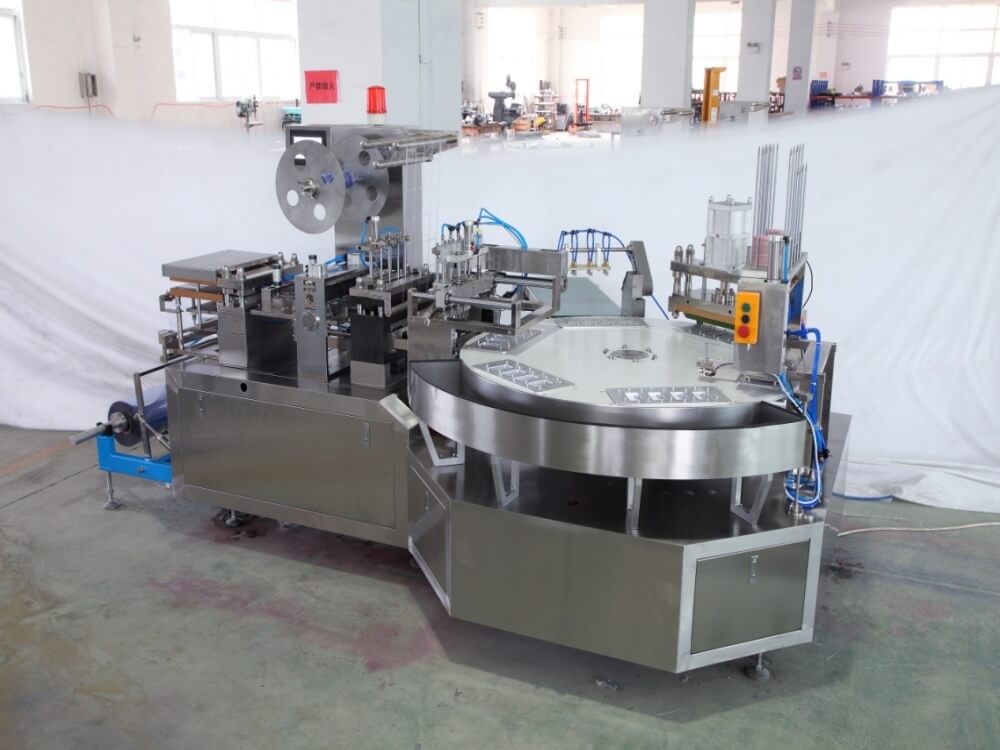
The liquid blister machine is fully automated throughout the entire process from film formation to product completion. The liquid materials are automatically filled, and the type of feeder is selected according to the product. There are generally peristaltic pump feeders and piston pump feeders.
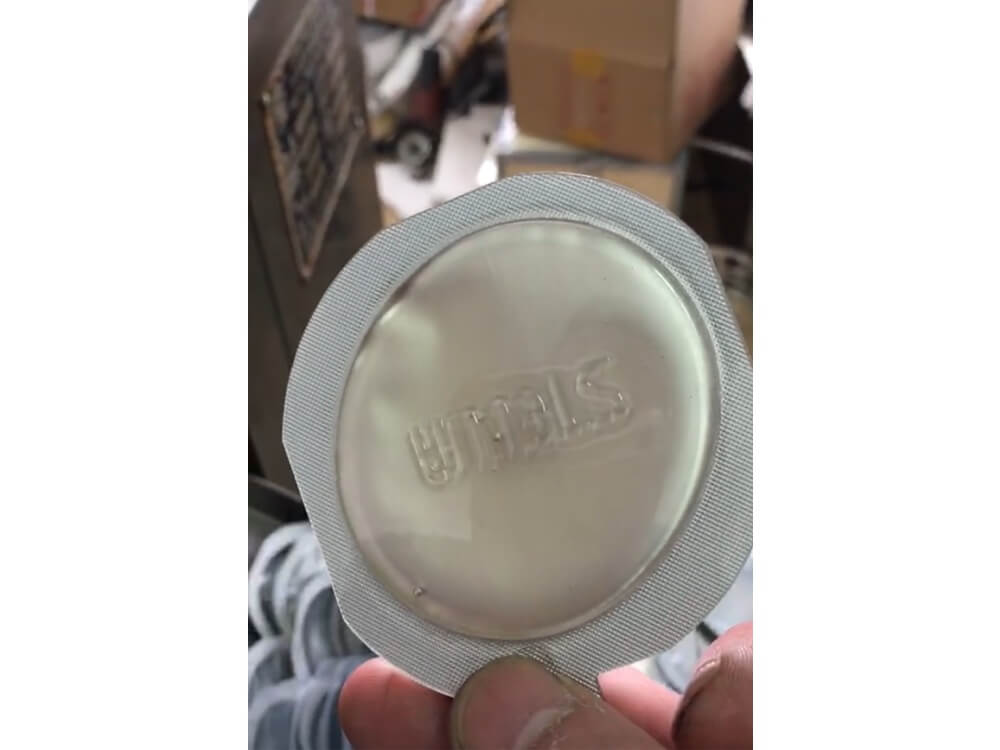
This machine doesn’t need any manual operation throughout the process. It can package liquids such as medicine solutions and jam, as well as paste-like materials. First, the packaging film is heated to become soft and then formed into neat blister cavities by vacuum molding; then, the precise amount of material is injected according to the set quantity, with the consistency being suitable for all; finally, the aluminum foil is sealed tightly, and the finished products are automatically cut out, with the leftover materials being recyclable.
An optional detection function is available, capable of producing up to 2300 units per hour. It is hygienic and efficient, and is highly suitable for large-scale factory production!
Liquid Blister Packing Machine Blister Forming
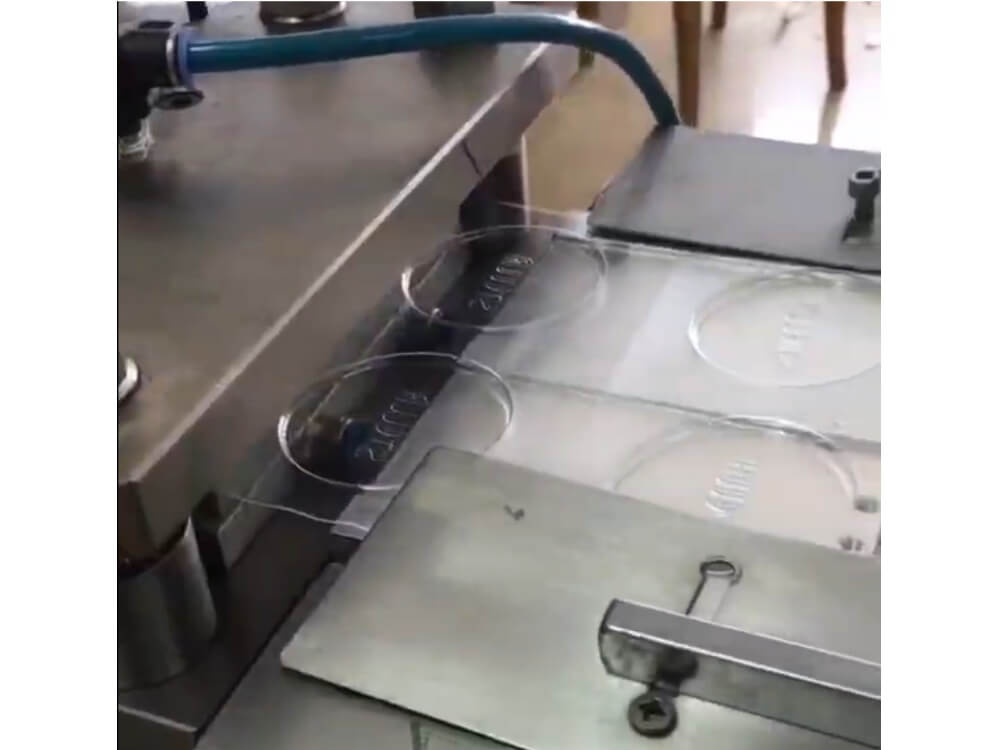
First, heat the packaging films, such as PVC and PET, to make them soft. Then, use molds and pressure to “form the film materials according to the mold shape”. The heating device in the machine evenly raises the temperature, allowing the film materials to reach a deformable state.
Next, through negative pressure injection molding or positive pressure blow molding, the softened film materials firmly adhere to the pre-set shape of the mold cavity. After cooling and setting, a series of neat blister cavities are formed, which are used to hold liquids or paste-like materials. The molding is precise and firm, meeting the requirements of batch packaging.
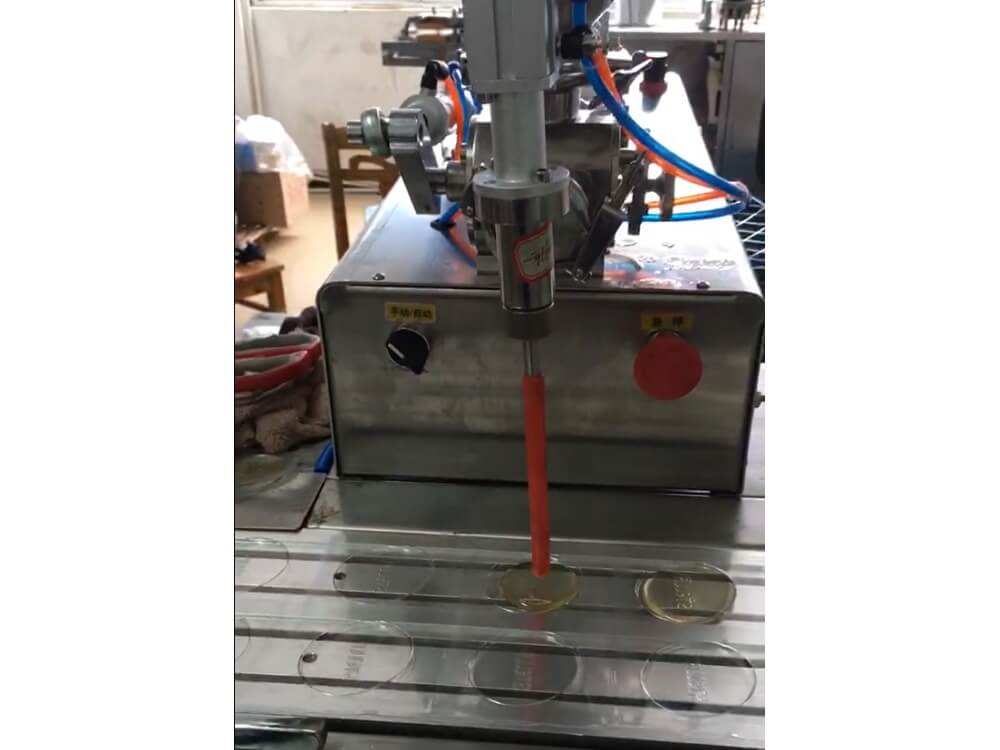
The core of liquid filling is “stable and accurate feeding according to the set quantity!” The servo-driven filling head of the machine is like an “intelligent measuring cup”. It first sets the dosage to be filled each time through the PLC.
Once the blister cavity is in place, the filling head precisely aligns with the cavity opening and adjusts the flow rate according to the viscosity of the liquid. For thick jams, a piston is used for pushing to ensure a smooth outflow without dripping or leaking.
The entire process is precisely controlled by the motor for the stroke, with an error control within ±1%. Regardless of the consistency, it can be filled evenly, fully meeting the quantitative control requirements for batch packaging.
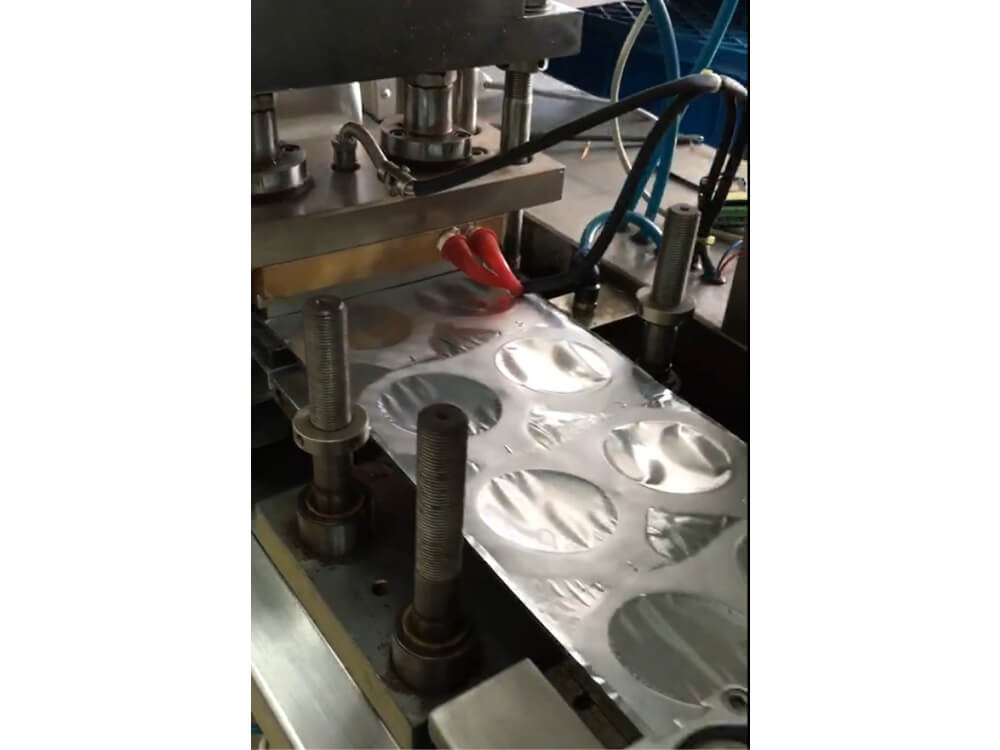
The core of heat sealing is “heating + applying pressure to make the film material stick firmly together!” After the blister is filled with liquid, the aluminum foil/composite film covering and the lower film align. The heat sealing device acts like a “precise electric iron”, heating at the set temperature while applying pressure.
The high temperature causes the contact area of the two layers of film to melt, and then it undergoes a brief cooling process for solidification, resulting in a tightly adhered sealed edge. Combined with the photoelectric positioning system for calibration of the position, it ensures that the sealing does not shift.
Whether it is liquid or paste-like materials, it can be tightly sealed without leakage, meeting the sealing requirements for batch packaging.
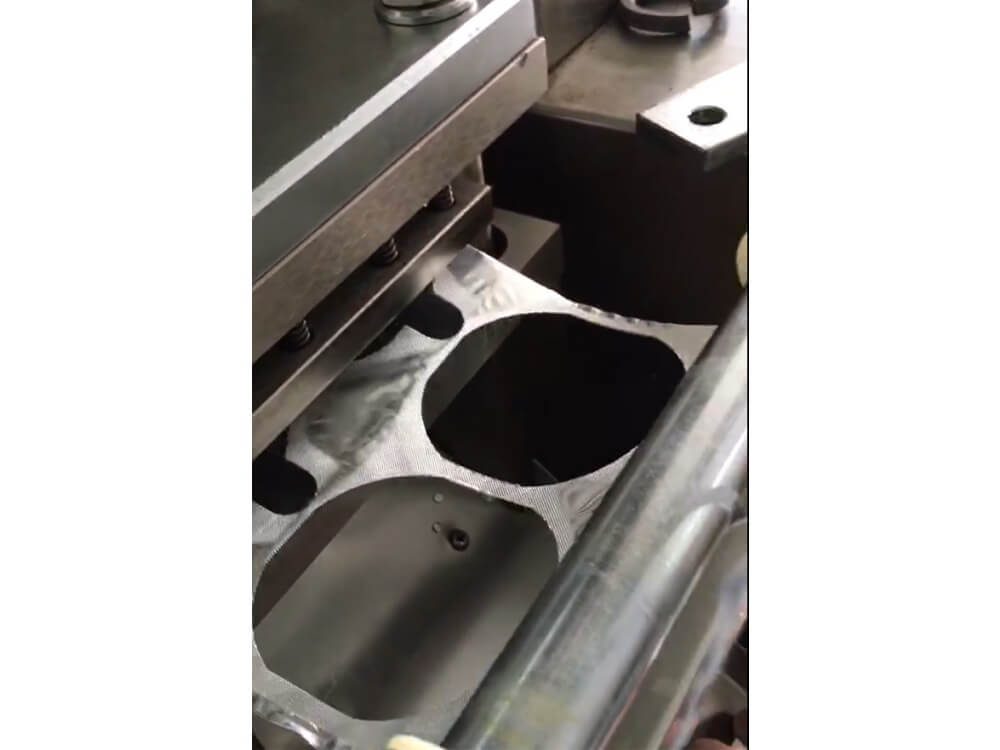
The core of punching is “mold cutting and separation”! After the sealed continuous blister strip is in place, the convex and concave molds in the machine precisely cooperate like “sharp scissors”, closing rapidly through the eccentric shaft and generating shear force to cut the blister strip into independent finished products.
The mold gap has been precisely adjusted, the cut edge is smooth without burrs, and a staggered arrangement design is adopted to reduce waste of edge materials.
Combined with the positioning system, it ensures that the cutting does not deviate, and the finished products are automatically discharged, while the waste can also be recycled. It is fast and saves materials, meeting the requirements of batch production.
The core of the finished product discharge system is “precise conveying + automatic separation!” The independently formed blister packages will move forward along the conveyor belt, just like “an automatic conveyor belt” delivering materials.
The machine uses guide plates and sorting mechanisms to separate the finished products and leftover materials – the finished products fall along the preset track into the collection box, while the waste materials are rolled up by a dedicated recycling device.
Combined with photoelectric positioning calibration, it ensures that the finished products do not stack or deviate, and the entire process does not require manual intervention. It is fast, neat, and perfectly meets the discharge requirements of mass production.
Here are the blister packing machine’s main technical parameters. know more, please contact us.
Model
Capacity
Max. Forming Area
Adaptive Material
Total Power
Machine Size
Machine Weight
DPP 80
2400blisters/hour
105*70*25mm
PVC, PET, PS, PVDC
2.8Kw
1840*900*1300mm
480kg
DPP 150
1200-4200blisters/hour
145*110*26mm
PVC, PET, PS, PVDC
3.8kw
2315*635*1405mm
820kg
DPP 180
1200-4200blisters/hour
170*110*26mm
PVC, PET, PS, PVDC
3.8kw
2550*640*1600mm
870kg
DPP 260
4800blisters/hour
240*140*26mm
PVC, PET, PS, PVDC
6.2kw
3000*730*1600mm
1400kg
Liquid Blister Packing Machine Components List
These are the standard components; all brands can be customized. More components details, contact us freely.
Model
PLC
Main Motor
Touch screen
Traction Cylinder
Frequency inverter
Electromagnetic
DPP 80
Siemens
Zhejiang
Siemens
Shenpu
Zhejiang Hongxing
AirTAC
DPP 150
Siemens
Zhejiang Taibang
Siemens
Shenpu
Zhejiang Delaier
AirTAC
DPP 180
Siemens
Zhejiang Taibang
Siemens
Kaogeer
Delaire
AirTAC
DPP 260
Siemens
Zhejiang Taibang
Siemens
Kaogeer
Delisle
AirTAC
Liquid Blister Packing Machine Price
Due to the varying production requirements of different factories, in order to meet market demands, we have designed and developed various types of liquid blister packaging machines. These include DPP 80, DPP 150, DPP 180, and DPP 260. Customers can choose the appropriate machine according to their own actual needs.
Machine Models
Machine Price Range
DPP 80 Liquid Blister pack machine
$5,100.00-$8,500.00
DPP 150 Liquid Blister pack machine
$9,800.00-$11,800.00
DPP 180 Liquid Blister pack machine
$12,200-$14,200.00
DPP 260 Liquid Blister pack machine
$16,800-$18,900.00
Note: Machine prices only for reference. Actual price as per your detail requirements.
FAQ
Q: Does the machine support the installation of a coding system that can imprint the production date and batch information?
A: Yes, our machine can equip.
Q: Does the machine support the replacement of molds to accommodate different specifications of product packaging?
A: Yes, it can. One machine supports different types of molds.
Q: Can the machine be compatible with liquids of different viscosities?
A: The filling parameters can be adjusted to accommodate a wide range of liquid volumes, from dilute liquid to thick jam.
Q: How long does it take to replace the mold?
A: The regular equipment replacement can be completed within half an hour. Replacement tools and instructional videos are also provided.
Q: How long is the lead time?
A: 30-40days after the mold drawing is confirmed.
Q: How long is the machine’s warranty period?
A: The whole machine is covered by a one-year warranty.
Q: What are the after-sales services?
A: Provide remote technical support and respond to fault inquiries within 24 hours.