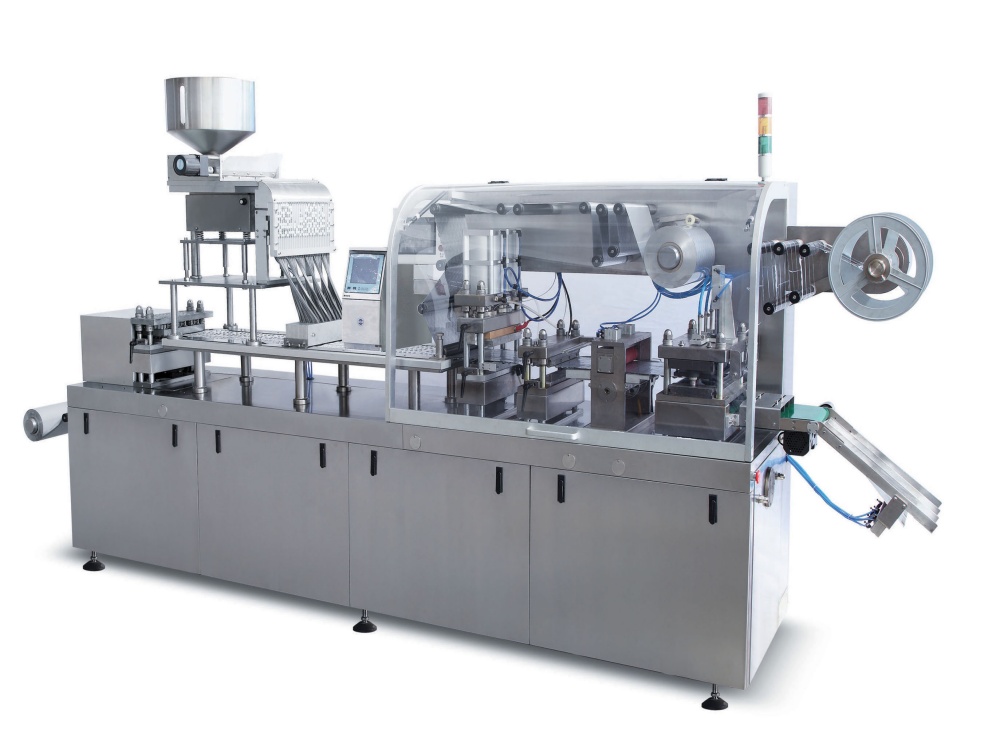
Why Maintenance is Your Profit Margin
In the pharmaceutical and packaging industry, a Blister Packing Machine is the heart of the finishing line. Unplanned downtime doesn’t just cost lost production hours; it jeopardizes GMP compliance and ruins OEE (Overall Equipment Effectiveness) scores.
In high-speed B2B environments—pharmaceuticals, food, and personal care—a single hour of downtime can cost $ 25,000+ in lost output and compliance risk. Yet, many plants still treat blister packing machine maintenance as reactive rather than proactive.
As an engineer with 20 years in the field, I have seen perfectly good machines scrapped simply because the cooling water system was ignored or the cam drive wasn’t lubricated. This guide provides a step-by-step, engineer-validated maintenance protocol based on 20 years of field experience across 200+ installations. You’ll learn how to:
Perform daily, weekly, and monthly checks
Calibrate critical parameters
Avoid the top 3 maintenance pitfalls
Extend machine life beyond 15 years
Daily “Start-of-Shift” Protocol (SOP)
Before the machine runs at full speed (e.g., 40-60 cycles/min), the operator must perform these non-negotiable checks.
Cleaning (The GMP Standard)
Forming Station: Remove any PVC/PVDC dust or aluminum shards. Debris here causes “pinholes” in the forming film.
Sealing Station: Inspect the knurled sealing roller or plate. Any residue from the previous batch will cause uneven sealing pressure.
Guide Rails: Wipe down the guide rails. Accumulated dust increases friction, straining the servo motors.
Pneumatic System Check
Blister machines rely heavily on compressed air for forming and punching.
Pressure Gauge: Ensure the main air pressure is stable (typically 0.4 – 0.6 MPa).
Water Trap: Drain the water from the air filter regulator. Moisture in the air lines will corrode pneumatic cylinders and contaminate the cleanroom environment.
Critical Systems Maintenance:
The Forming Station (Heating & Molding)
For Thermoforming (PVC), temperature control is paramount.
Heater Inspection: Check heating plates for “cold spots.” A variance of >5°C across the plate will result in uneven blister wall thickness.
Cooling Water: Ensure the mold cooling water is circulating. If the mold gets too hot, the PVC will stick, causing jams.
For Cold Forming (Alu-Alu):
Punch Pins: Inspect Teflon coating on forming pins. Worn pins lead to cracks in the aluminum foil during the deep draw process.
The Sealing Station (The Critical Control Point)
This is where product integrity is secured.
Pressure Calibration: Use pressure-sensitive film (Fuji paper) once a month to verify that the sealing plate/roller applies even force across the entire web width.
Temperature Sensor: Calibrate the thermocouple. A reading of 160°C on the screen means nothing if the actual probe is damaged and reading 145°C.
The Cutting/Punching Station
Blade Sharpness: Dull blades create “whiskers” or rough edges on the blister card. Replace or sharpen punch dies every 2 million cycles (or as per OEM recommendation).
Expert Insight: Common Pitfalls & Pro Tips
The “Over-Greasing” Error :
Many junior technicians believe “more grease is better.” This is false. In a GMP environment, excess grease attracts dust and can drip onto the packaging material.
Pro Tip: Use Food-Grade Lubricants (NSF H1 registered) only. Apply a thin film to cam tracks and gears. If you see grease oozing out, you’ve used too much.
The “Cooling Loop” Blind Spot :
I often see factories ignoring the chiller unit. If your blister machine’s forming station is overheating, don’t just lower the heater temp. Check your chiller’s flow rate. Blocked water channels inside the mold are a frequent, invisible culprit for poor forming quality.
Troubleshooting Common Issues
|
Issue
|
Probable Cause |
Corrective Action
|
| Blister not forming clearly |
Heating temp too low or Air pressure <0.4MPa |
Increase temp by 5°C steps; Check compressor output |
| Micro-leaks in sealing |
Uneven sealing pressure or Knurling pattern dirty |
Clean sealing mold with brass brush; Check pressure springs |
| Web drifting (Tracking issue) |
Guide rails too loose or Roll tension incorrect |
Adjust edge guides; Check tension dancer arm |
FAQ (People Also Ask)
Q: How often should I replace the sealing mold?
A: It depends on usage, but typically every 1-2 years for high-production lines. However, if you notice the knurling pattern wearing down or consistent leak test failures, replace it immediately.
Q: What is the difference in maintenance for Flat-plate vs. Rotary machines?
A: Rotary Machines: Require more frequent gearbox oil changes (monthly vs. quarterly) due to continuous motion.
Flat-Plate Machines: More prone to thermal expansion warping—allow 30-minute warm-up before calibration.
Q: How often should you calibrate a blister packing machine?
A: Calibrate sealing parameters weekly under normal operation. For high-mix environments (frequent format changes), calibrate before each product changeover.
Q: What causes blister pack sealing failure?
Top causes: uneven jaw pressure (45%), contamination (30%), incorrect temperature (15%), and worn seals (10%).
Q: Can you use regular lubricant on blister packing machines?
A: No. Only use NSF H1 or H2 certified food-grade lubricants in product-contact zones. Non-compliant lubricants risk contamination and audit failure.
Q: How to clean aluminum-aluminum (Alu-Alu) forming molds?
A: Use a non-abrasive nylon brush and deionized water with mild detergent. Never use metal scrapers—risk micro-scratches that propagate cracks.
Q: What is the average lifespan of a well-maintained blister machine?
A: With preventive maintenance, 15–20 years. We’ve documented Uhlmann machines still running at 92% OEE after 18 years.
Conclusion
Maintaining a blister packing machine is not just about fixing what’s broken; it’s about disciplined prevention. By adhering to a strict cleaning schedule, monitoring pneumatic stability, and respecting the tolerances of your sealing station, you ensure your production line runs at peak efficiency.